
The loss on diesel sales has inched up marginally to Rs 8.37 a litre even as a surge in international oil rates and a weakening rupee wiped out gains from a 50 paise increase in the price of the fuel.

The fall in crude prices has added to the gains.

Changing tracks helps. But, not taking the beaten path isn't always helpful. This is the story of two of India's biggest privatisations - Air India and Bharat Petroleum (BPCL). Nearly two decades after the last privatisation, a landmark divestment concluded this year when the loss-making national carrier Air India was sold to the Tatas.
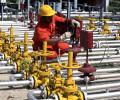
The government has ordered Oil and Natural Gas Corp (ONGC) to pay a near-record Rs 13,764 crore as fuel subsidy for the December quarter, a move that will dent the firm's profitability.
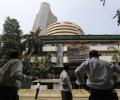
HDFC, ONGC, Maruti Suzuki, HeroMoto Corp and Bajaj Auto gained the most on BSE Sensex

The shift comes as the gap between the international benchmark Brent and the Middle East price marker narrows

Divestment in BPCL, SCI, Concor, NEEPCO, and THDC would help the Centre keep its fiscal deficit in check in the wake of subdued tax revenues and a Rs 1.45-trillion hit for the exchequer from corporation rate cuts.

Nifty50 surged 87 points to end at 8,157, highest closing levels since Oct 29, 2015.

The government is selling its entire 100 per cent stake in Air India but wants effective control to stay with Indian nationals.

All of these companies are present in India.
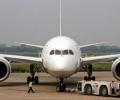
Jet fuel (ATF) price was on Monday hiked by a steep 56.5 per cent and that of non-subsidised cooking gas LPG by Rs 11.5 per cylinder on the back of firming up of international oil rates, but petrol and diesel prices continued to remain on freeze for a record 78th day. Aviation turbine fuel (ATF) price was hiked by Rs 12,126.75 per kilolitre (kl), or 56.5 per cent, to Rs 33,575.37 per kl in the national capital, according to a price notification by State-owned oil marketing companies.
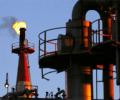
Indian basket at 6-month low of $49.11 a bbl
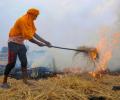
To prevent rise in air pollution levels, oil marketing companies and thermal power units were planning to procure stubble from farmers to make bioethanol and promote the central government's 'Agricultural Mechanization' for crop residue management. But both have seen minimal success.
Privatisation-bound Bharat Petroleum Corporation Ltd (BPCL) on Thursday said it has no intention to sell a part of its stake in Petronet LNG Ltd and Indraprastha Gas Ltd (IGL) to help its new owner avoid making an open offer for the two gas companies. BPCL holds 12.5 per cent of the shareholding in India's largest liquefied natural gas importer, Petronet, and a 22.5 per cent stake in city gas retailer, IGL. It is a promoter of both the listed companies and holds board positions.

Ricoh India, the largest gainer among these pack, has rallied 192 per cent from Rs 294 to Rs 859 on the BSE so far in the current calendar year.
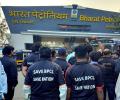
Privatisation-bound Bharat Petroleum Corporation (BPCL) may sell a part of its stake in Petronet LNG and Indraprastha Gas (IGL) to shed its promoter status to obviate the need for its new owner to make open offers for the two gas companies, sources said. BPCL holds 12.5 per cent of shareholding in India's largest liquefied natural gas importer, Petronet, and a 22.5 per cent stake in city gas retailer, IGL. It is a promoter of both the listed companies and holds board positions. As per the legal position evaluated by Department of Investment and Public Asset Management (DIPAM) - the department running the process for sale of government's entire 52.98 per cent stake in BPCL - the acquirer of BPCL will have to make an open offer to the minority shareholders of Petronet and IGL for acquisition of 26 per cent shares, three sources with knowledge of the matter said.

The fire was brought under control after three hours, a Mumbai Fire Brigade official said, adding that cooling operations were underway.

On the last day of FY!5, the Sensex ended lower by 18.37 points at 27,957.49.

India on Tuesday pitched for a stake in vast oil and gas fields as well as LNG terminals in the frozen Artic of Far East Russia as it looked to import more oil from the former Soviet republic as part of a strategy to diversify its energy basket.

It is time he stood up and assured the middle class that they can count on him as one of their own, says Dr Sudhir Bisht.

Jet fuel constitutes over 40 per cent of an airline's operating costs and the price increase will raise the financial burden on cash-strapped carriers.
Older workers are headed for the VRS exit in larger-than-expected numbers even as unrest stirs over unrevised wage settlements.
Attractive pricing coupled with improving prospects make the offer lucrative

Automobile company Tata Motors, metals and mining major Vedanta, oil marketing firm Bharat Petroleum Corporation (BPCL), private sector IndusInd Bank, and two-wheeler major Bajaj Auto have witnessed their market cap slip below the Rs 1-trillion mark this year.

The loss, which is made good through government subsidy, has declined since March as the rupee strengthened against the dollar and global oil prices softened.
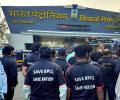
In 2017, a consortium led by Russian state oil company Rosneft agreed to buy Essar Oil for $12.9 billion in India's biggest foreign acquisition of a homegrown company. Rosneft's buyout of Essar's assets was meant to herald a wave of energy investments in India - over six decades after Esso, Caltex and Shell invested in India's refining sector in the 1950s. But the government has tripped up in its efforts to sell Bharat Petroleum Corporation Ltd (BPCL), formerly Burmah Shell, a blue chip public sector company. Bidders include a couple of global funds and resources firm Vedanta.

This comes at a time when the COVID-19 crisis is expected to derail the government's revenue maths for 2020-21, hitting the mop-up from sources such as taxes and divestment.

The market breadth, indicating the overall health of the market was strong

Sena also said that laying a brick for the $44 billion (Rs 3 lakh crore) mega refinery project at Nanar in Ratnagiri district of Maharashtra would be akin to laying the foundation stone for a cancer hospital there.

Struggling to meet budget targets, the government had in the just concluded fiscal asked cash-rich PSUs to pay second interim dividend as well as undertake share buyback.
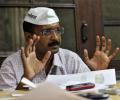
The likely solution that appears before the AAP government is to seek for a higher quota of domestic natural gas for Delhi, which would bring down auto and cooking gas prices.
RBI's steps will prevent rupee from slipping, even if OMCs meet entire $ demand from market
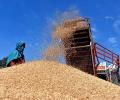
The uptick in prices ranging from steel to wheat could benefit lots of commodity-based companies -- from State-owned SAIL to the agro exporters.

The third-quarter financials didn't excite market watchers. But equity investors can still make money if they invest in the right stocks.
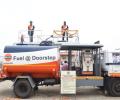
The permission right now is for delivery only for stationary usage. This limits the service to those who operate units like diesel generation sets.
'BPCL has always been spoken about as a multinational company though it is State-run... this sets our work culture also apart.'

'There exists a 'brotherhood' of sorts for a very long time and corrupt dealers and corrupt OMC officials are in it together,' Ashwani Attrish, founder, Empowering Petroleum Dealers Foundation, tells Sudhir Bisht, a veteran of the petroleum industry.

There is the problem of regions in the North East being theatre for power-play by nations with borders and influences converging in those parts, which in turn requires a sizable presence of the armed forces, notes Shyam G Menon.

The price of the Indian basket of crude oil jumped as much as 78 per cent to cross $50 a barrel last week, from a multi-year low of $28 in January.

Referring to Modi, Adityanath and Union Home Minister Amit Shah as 'outsiders', the farmer leader said he has no objection if they become prime ministers after winning polls from Uttarakhand or Gujarat.
